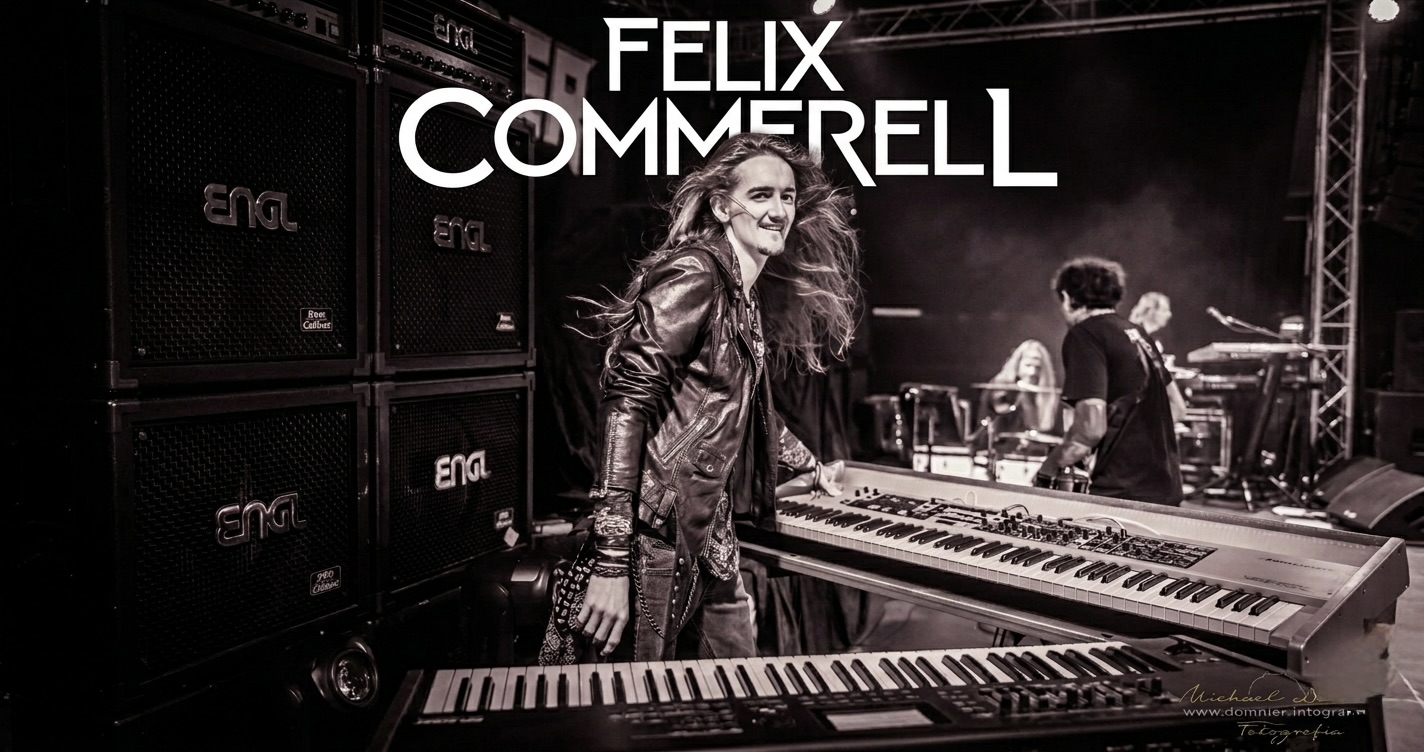
Felix Commerell: The DNA of ’80s Rock Brought Into the Present Through the Keyboard
The new generation of European rock continues to evolve by blending classic influences with modern sounds. From Lucerne, Switzerland, keyboardist and songwriter Felix Commerell positions himself as one of the emerging acts within the synth rock scene, building a sound that captures the essence of ’80s rock and projects it into a contemporary aesthetic.
Before starting his path as a solo artist, Felix was part of the band Fighter V and participated in various projects, an experience that allowed him to develop a solid vision both in the studio and on stage. Today, his proposal stands out for combining melody, emotion, and a strong sense of creative energy with cinematic textures and a clear sonic identity.
Through digital platforms such as Facebook, Instagram, and TikTok, he has also found a way to connect with new audiences by reinterpreting iconic ’80s rock intros on the keyboard, reinforcing his concept of “80s DNA with modern drive.”
With his latest release, a reinterpretation of the classic “Run To You” by Bryan Adams alongside Dave Niederberger, Felix continues to define his path as a solo artist. In this interview with Glam / Hard Rock, he talks about his evolution, influences, and vision within today’s rock scene.
Interview with Felix Commerell
“80s DNA with modern drive.”
1. Your project is defined as a reinterpretation of classic rock with a modern and cinematic approach. How did you develop that sonic identity?
I’ve always been fascinated by music that creates a strong atmosphere and feeling. One of the first musicians who really inspired me was Carlos Santana. What impressed me was that his playing was never about showing off as a guitarist, but about expressing emotion and telling a story through sound. That idea had a big influence on how I approach music myself.
During my time with Fighter V we already carried strong 80s influences in our music while still trying to create something of our own. For me it was never about simply copying that era, but about celebrating the rock music of the 80s in a modern context. I’ve always liked experimenting and trying new ideas, so I wanted to take the spirit and musical DNA of the 80s and turn it into something that feels like my own style. With my solo project I now have even more freedom to explore different sounds and arrangements that might feel unusual or unexpected but can lead to something unique.
The cinematic aspect comes from my love for big productions and soundtrack-like atmospheres. I like music that immediately grabs your attention and creates an emotional journey. As a keyboard player I naturally use synths and textures to give each song its own character, but I always try to keep the balance and leave enough space for vocals and guitars, which for me are also essential elements of the kind of rock music I love.
So the idea behind my sound is really about combining the emotional songwriting and character of the 80s with modern production and new ideas to create something that feels both nostalgic and current.
2. A big part of your proposal revolves around the DNA of 80s rock. What is it about that era that remains so relevant to you today?
For me, the 80s were an incredible era for great songwriting. Many songs from that time have melodies and hooks that stay with you forever. Even decades later, people still recognize those choruses and intros instantly, which shows how strong the songwriting was.
On top of that, the productions were often massive. The songs were built around a big sound, with powerful drums, guitars, and synths creating a huge atmosphere. That kind of production made the music feel very powerful and emotional.
For me, that era is a great reminder of how important strong songwriting and emotional impact are. Those elements are something I always keep in mind when creating my own music.
3. After years of playing with Fighter V and participating in other projects, what led you to start this new chapter as a solo artist?
After the release of our second album with Fighter V, I reached a point where I felt that the band and I were gradually moving in different directions. With the lineup changes we had over time, it started to feel like our visions and goals didn’t fully align anymore. The band was a huge part of my life for over seven years, and I gave everything to help build it and push it forward, so stepping away definitely wasn’t an easy decision.
During my years in Fighter V, my main focus was always on developing the band and working towards our shared goals, which meant that many of my own musical ideas and ambitions had to take a step back. When that chapter came to an end, I had the time and freedom to explore those ideas.
“The solo project developed naturally and gave me the freedom to explore ideas I hadn’t had the chance to pursue before.”
I wanted to keep creating music and express myself in new ways that I hadn’t had the chance to pursue before. The project allows me to experiment with different sounds and collaborate with various fantastic musicians, which is something I really enjoy.
I still love working in band environments and performing live with other musicians. So my goal is definitely to be back on stage with new projects in the future, whether that means building a band around my own music or joining other exciting projects. For now, the solo project gives me the freedom to stay creative, connect with different artists, and open new opportunities while continuing my journey as a musician.
4. What differences do you find between working within a band and developing your own artistic project?
Working in a band and developing your own project are two very different experiences, and both have their advantages. In a band you have several creative minds in the room, which can be incredibly inspiring. Sometimes you’re just playing around with an idea and another band member immediately recognizes the potential and tells you to record it.
“That kind of creative exchange can lead to moments you might not reach on your own.”
But at the same time you still have to find a balance between different opinions and make sure the music fits the band’s overall vision.
With my solo project I have more freedom to explore ideas and follow my own musical instincts without having to worry as much about whether something fits a specific band style. But it also comes with a lot of responsibility. While in a band the organizational aspects can be split between the band members, as a solo artist you’re involved in every step of the process, from writing and recording the songs to coordinating releases, visuals, and promotion. I think many people underestimate how much work goes into releasing music beyond the creative side.
When it comes to performing live, I definitely prefer the energy of a band on stage. Playing together with other musicians creates a special dynamic where everyone pushes each other, and that’s something I really love about being in a band.
5. You work as a musician in different environments: session, studio, and live performances. How does your approach as a keyboardist change in each of these contexts?
In the studio there is a much stronger creative aspect. You really dive deep into the song, think about the right keyboard arrangements, and try to find sounds and parts that support the music in the best possible way. It’s a very detailed process where you have the time to experiment, redo things, and keep refining ideas until you feel the result truly serves the song.
Live performances are very different because everything happens in the moment. Once you step on stage, you have to deliver right there and then. That’s why preparation becomes extremely important. You want to know the material inside out so you can focus on the performance rather than thinking about the notes.
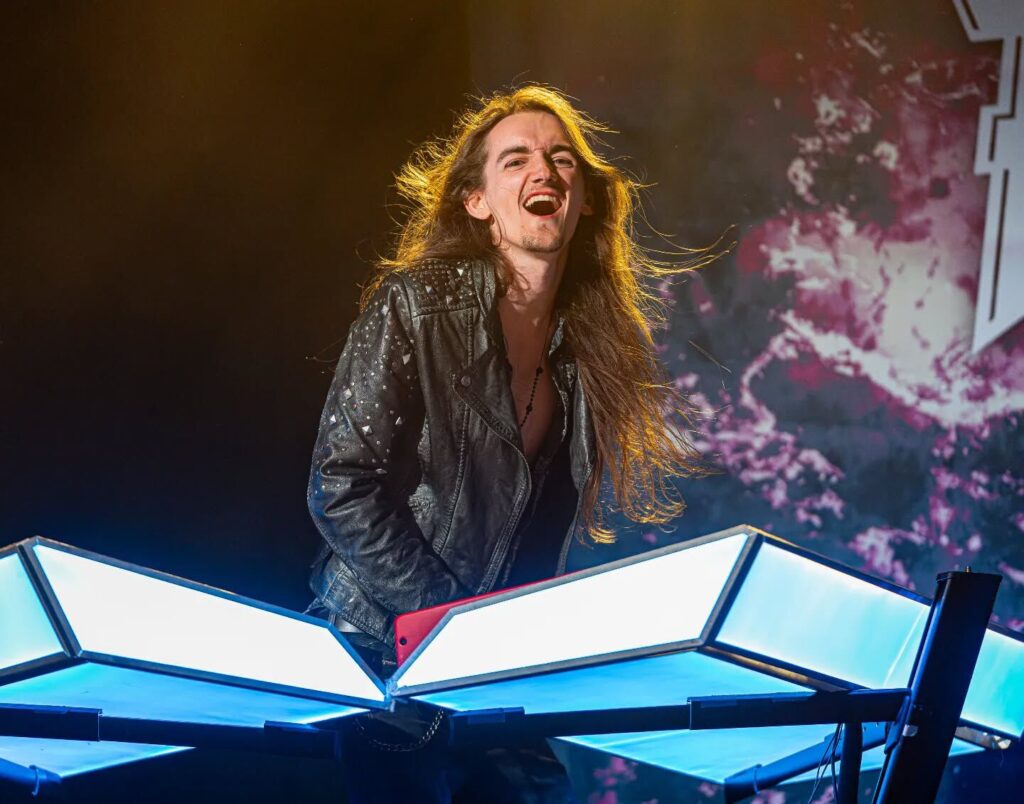
But playing live is not just about executing your parts correctly. It’s also about serving the band and the songs so the audience gets the best possible experience. Bringing energy, stage presence, and genuine joy to the performance makes a huge difference, because that connection with the audience is what really turns a concert into something memorable.
“That connection with the audience is what really turns a concert into something memorable.”
6. Your latest release is a reinterpretation of “Run To You” by Bryan Adams. What motivated you to cover this classic and how was the process of adapting it to your style?
I had the idea to take a softer, more pop-oriented 80s song and turn it into a synth rock track. While going through different songs from that era, the intro of “Run To You” immediately caught my attention. It’s such an iconic opening, and I instantly had the idea of translating it into a more modern synth-driven sound.
“It’s such an iconic opening, and I instantly had the idea of translating it into a modern synth-driven sound.”
From there I started building the arrangement around that intro.
When adapting the song, I wanted to give it a stronger rock feel. I added several synth layers to create a bigger atmosphere and worked on heavier guitar parts together with Erik Bogren, who really helped bring that vision to life. For the solo part I really switched things up and went with a more electronic-style synth solo to give the song a new twist.
For the vocals I reached out to Dave Niederberger, the former singer of Fighter V. We had already worked together on the band’s debut album, so I knew his voice would fit the arrangement perfectly.
7. We know you are working on new material alongside Gianni Pontillo, current vocalist of Nazareth. How did this collaboration come about and what can we expect from this project?
I first got to know Gianni Pontillo through the Swiss rock scene. In 2020 we had the chance to open a show for his band, and then last year we met again backstage at a festival where we were both playing. We started talking about music and I mentioned that I was planning to record a few covers for my solo project. I asked him if he’d be up for joining one of them, and he liked the idea.
A few months later I reached out again and we made it happen. The song featuring him will actually be my next release coming very soon, and it’s a reinterpretation of a Swiss rock classic.
The song turned into a heavier arena rock track with Gianni’s powerful vocals leading the way, supported by two other fantastic musicians who joined me for this recording. And of course the synths play a big role in the track as well, so I’m really excited for people to finally hear it.
8. Your music has a strong presence of melody, emotion, and creative energy. How do you balance these elements when composing?
For me it usually starts with a riff or a melody on the keyboard. From there I begin building the song around that first idea and see where it takes me. The emotional dynamics are very important to me. A song can’t be at 120 percent the whole time. It needs moments where it builds up, reaches a big chorus, but also parts where it pulls back again. Those contrasts are what make the emotional moments really stand out.
The arrangement also plays a huge role in shaping the final feeling of a song. Even if the composition itself stays the same, the way you arrange the instruments can completely change the vibe or even push a song toward a different genre.
While balancing all these aspects, it’s important not to think of yourself as the center of everything. You have to leave space for the other musicians as well. There can be moments where you go all out, but there also need to be moments where you step back and let someone else take over. In the end, you have to serve the song, not your ego.
“You have to serve the song, not your ego.”
9. On your social media, you share reinterpretations of iconic 80s rock intros on the keyboard. What motivates you to bring these classic moments back and how do they influence your identity as an artist?
I started doing this video format mainly as a way to connect with people who share the same love for the sound of the 80s. The response has been amazing, especially on Facebook. I’ve received a lot of feedback from 80s rock fans, other musicians, and many fellow keyboard players. It’s great to see that so many people still connect with that sound today.
I’ve always been a big fan of strong intros. For me that’s often one of the most exciting parts of a song, because it’s the moment that pulls the listener in. That’s probably also why writing intros is something I enjoy a lot when composing my own music.
“It’s fascinating how just a few notes can be enough for people to instantly recognize a song.”
10. How important do you consider independent media platforms like Glam / Hard Rock for promoting hard rock today?
Independent platforms like Glam / Hard Rock are really important for the scene. Hard rock has always had a very passionate and loyal community around the world, and platforms like this help keep that community connected while giving artists a place to share their music and stories. They give musicians visibility and the chance to reach people who are actively looking for this kind of music.
“Without these platforms, it would be much harder for artists to get their music out there.”
At the same time, they help keep the spirit of the genre alive by supporting both established bands and new artists who continue to keep the genre moving. I’m really grateful for platforms like Glam / Hard Rock that give musicians the opportunity to be heard and share their music with fans.
11. Nowadays, you are building an audience through digital platforms. How has this changed the way you develop your career?
I think it’s both a blessing and a curse. Digital platforms have opened the door for independent artists to share their music with the world. You don’t necessarily need big labels or management anymore to get your music heard. Today you can release music yourself, share it through social media, pitch your songs to playlists, and run your own promo campaigns.
What I don’t like about this development is that it almost isn’t a choice anymore. If you really want your music to be heard and build a career, you have to jump on that train. You need a strong presence on social media and you have to promote your music in many different ways.
The challenge is that all the time required to keep those things running often takes away from the time you could spend writing new music, recording songs, and improving your skills as a musician.
“Finding the right balance between creating music and promoting it has become essential.”
12. As a growing artist, what vision do you have for taking your music to a global audience?
As mentioned before, I think one of the most important promotional tools today is social media. It allows you to present your music in creative ways and reach fans from all around the world. You can share your story and let people follow your journey from the very beginning.
Working with independent media platforms also plays an important role. Interviews like this give artists the opportunity to talk more about their music, their personality, and the ideas behind their projects. That helps people understand what you stand for as an artist and allows you to build your identity as an artist beyond just the music itself.
Another great and very fun way is through collaborations. For my releases I want to work with different musicians from all over the world. That not only helps reach new audiences, but also opens the door for new creative ideas. And beyond that, it’s always very inspiring to work together with other musicians.
13. If you had to define your project with a single idea or message for those discovering your music for the first time, what would it be?
“80s DNA with modern drive” probably describes my project best. My goal is to capture the spirit of classic 80s rock and give it a modern pulse, combining the best of both worlds.
With a solid foundation built throughout his career in bands, projects, and as a session musician, Felix Commerell positions himself as one of the new proposals within European synth rock, standing out for his ability to reinterpret the spirit of classic rock from a modern perspective.
His approach as a keyboardist, along with his ability to connect generations through music and digital content, makes him an artist who understands both the legacy of the genre and the tools needed to evolve it today.
With new releases on the way and an increasingly defined artistic identity, Felix continues to build a project with international projection, keeping the spirit of rock alive while taking it into the future.
Listen & Follow Felix Commerell
Latest Release
Run To You (feat. Dave Niederberger)
Official Links
Website: https://www.felix-commerell.com/en
Facebook: https://www.facebook.com/felixcommerell
Instagram: https://www.instagram.com/felixcommerell
TikTok: https://www.tiktok.com/@felixcommerell
YouTube: https://www.youtube.com/@felixcommerell
Spotify: https://open.spotify.com/intl-de/artist/0oyPV1Y8OGya6ypcQJH36d
Apple Music: https://music.apple.com/ch/artist/felix-commerell/1845739816